Last weekend, my family found Bigfoot.
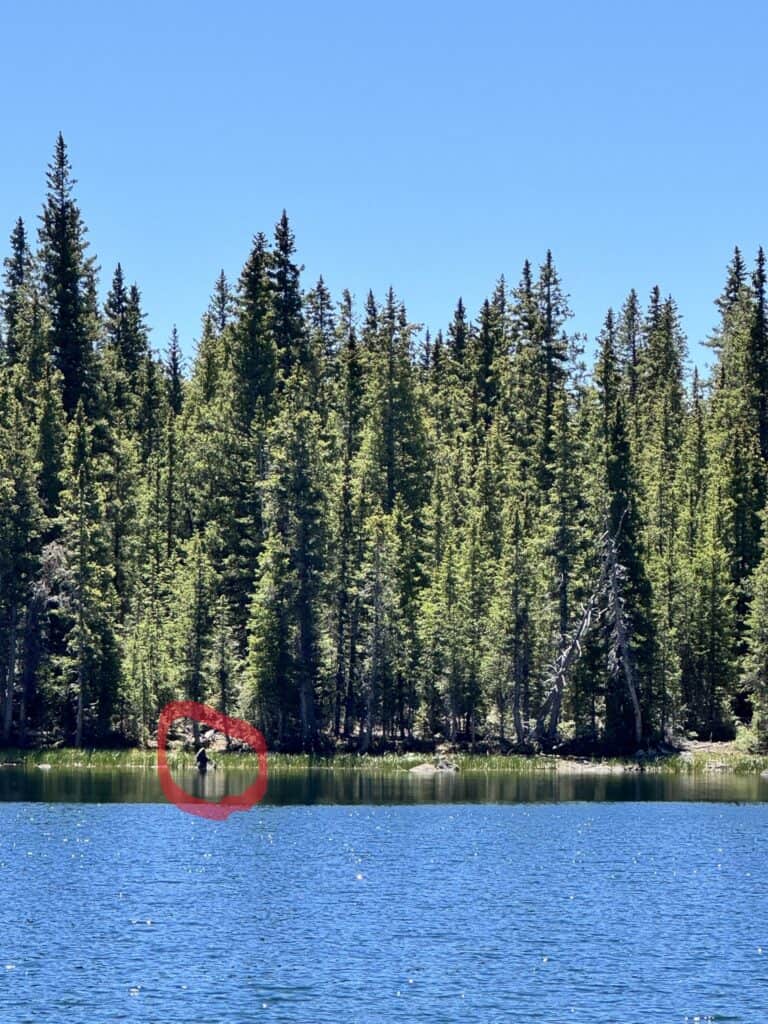
He was across the lake, standing in the shallows. Hunched over, dead still, watching the water, poised, ready to take a trout out of the lake with his bare hands. Nobody said the word out loud. We all just knew. My daughter had her phone up. I was already deciding how I would write about it.
Then my wife said, flatly: “John. That’s a rock.”
And she was right. It was a rock, doing an incredible impression of a creature that exists only in our minds. For twenty full seconds, every one of us had seen him. Not because he was there, but because we wanted him to be.
The lake didn’t change in that moment. The rock didn’t move. The thing that did change was the story we tell ourselves about the rock. And once I realized it, I couldn’t stop noticing it, because it is something I do all the time.
We Don’t See Reality. We See the Story.
Here’s what unsettled me about those twenty seconds. We did not look across the water, see a gray shape, and reason our way to Bigfoot. There was no reasoning. We saw the beast. The interpretation arrived fully assembled.
This experience didn’t just feel like a story; it was the truth. The rock had texture, posture, and intention. We could see him deciding whether to grab the fish. None of that was in the lake. It was in us, projected outward onto a rock that had been sitting there minding its own business for a few thousand years.
If we can do that to a rock, in good light, sober (we don’t drink) and calm on a Saturday afternoon, then what are we doing with the things that really matter?
The Dangerous Version
A rock is harmless. Luckily, nobody got hurt by our lakeside sasquatch. But, unfortunately, I do the same thing with people, more than I care to admit, and there the stakes are not quite as funny.
I will build a whole narrative about someone before they have said a single word to me. I’ll decide what a colleague’s silence means. I’ll read an email in the voice I’ve already assigned them and feel my jaw tighten at a tone they never used. I’ve made someone a villain out of nothing but my own assumptions. Then I treat them like one. And when they bristle at being treated that way, I take it as proof that I was right.
Learning to Ask “Is That a Rock?”
I want to be specific, because this idea is easy in theory, but its application is so much harder.
It looks like noticing the heat in your chest when a teammate pushes back, and instead of riding the story that he’s undermining you, asking whether he might simply disagree and care. Maybe it’s your teenager going quiet at dinner and you choosing, against every instinct, to ask what the silence is about. Maybe it’s defiance. Or, maybe it’s a hard day you know nothing about. I tell myself I already know, yet I rarely do. And, the only way to find out is to get closer, not to narrate from across the lake.
My wife did me a real service that afternoon. She didn’t have better eyesight. She had less investment in the story. I wanted Bigfoot and I was envisioning the fame that would come from finally catching the elusive beast on camera. She wasn’t. Therefore, she could see the rock for what it was. It tends to happen this way. The person least caught up in the story is the one who can see what’s actually there. This is a good argument for keeping people around us who will say, “That’s a rock,” and for becoming, slowly, someone who can say it to himself.
I Am the Easiest Person to Fool
I should admit that I am not the hero of this story, and not only because I mistook a rock for a cryptid in front of my children.
There’s a worse one, and I let it slip without noticing. I was already deciding how I would write this. Before I knew what I was looking at, I was shaping it into something usable. I do that constantly. My hunger for a good story can make me a bad witness to my own life. I see the version that’s interesting, the version that confirms what I already believe, and I’m so involved in the story that I forget to ask whether it’s real.
I still don’t know how to check my biases and I’m learning to treat that feeling of being sure as a yellow light. Usually, it means I’ve stopped looking. The stories I tell myself come fast. They’re confident and they’ve been running my whole life. But, when this happens, I need to be willing to walk down the shore and see if it is sasquatch or just a rock.
What Are You Sure You Saw
That afternoon, once we realized that we saw a rock, Bigfoot vanished. The lake didn’t change and the rock didn’t move, but our perception did. And we got the truth back.
Most of us are not short on conviction about the people and situations in our lives. We’re short on the humility to get close enough to check. We’re certain about the difficult coworker, the distant spouse, the kid who’s pulling away, and we’ve never once walked to the water’s edge to see whether the creature we’re confident exists is actually standing there.
What are you sure you saw, that you’ve never walked down to check?
Related Reading
- The Wilderness Gap (or, the day my phone took the hit)
- The Stream That Never Questioned Itself
- Living According to Your Values
Hi, I’m John!
I’m a father, leader, outdoorsman, and the founder of PathForgeXP. I grew up in Moab, Utah, and I spend most of my time helping fathers reconnect with what matters through wilderness retreats and intentional living. I don’t have this figured out. I’m just a man on the trail, writing about what I’m learning along the way.